Wednesday, 14 November 2018

Rambo trilogy

First Blood

Cast: Sylvester Stallone, Brian Dennehy, and Richard Crenna

Director: Ted Kotcheff

93 minutes (15) 1982
Studio Canal 4K Ultra HD  

Rating: 9/10
Review by Michael Marshall Smith
         
The key thing you have to remember about First Blood, the movie that introduced Rambo to the world, is that it came before Rambo: First Blood II, and Rambo III. This may sound self-evident. But, while the sequels could reasonably be described as pieces of jingoistic crap, First Blood is a honest-to-goodness proper movie, of a type which people seldom bother to make any more.

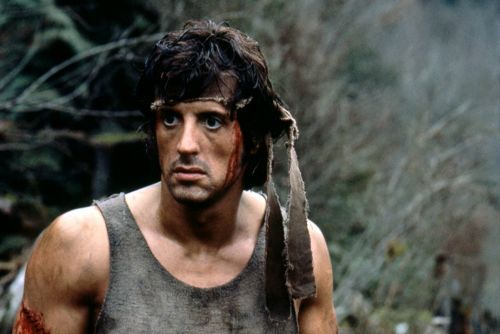
John Rambo is a drifter, a veteran of the war in Vietnam. On a search for surviving members of his platoon - and after discovering that he’s the only one left - he happens upon a small burg in the Oregon mountains, looking for a bite to eat. The local sheriff feels it’s better that he keep moving on, and gives him a lift out of town. Rambo decides that he’s had enough of being shoved around, and walks the hell back into town. The cops push him just a little too hard, and Rambo knocks heads together before escaping into the woods, with the sheriff hard on his tail. Neither are bad men, and neither will back down. Both are simply defending what they believe in - and hell follows after.


Had it not been for the muddying effect of the vastly politically-incorrect sequels, this movie would be remembered as one of the great action movies of the early 1980s. Its take on Vietnam, while not perhaps utterly fashionable, is low-key and not objectionable - providing, in the unreasoning conflict between the two leads, as good a moral as any. The movie’s mythic beats - the hero crossing water to return to the town he's been thrown out of; a transformative time in the wilderness; and the wild man’s return to wreak revenge on the civilisation which has ostracised him - all work brilliantly as a modern-day western. 


No one is ever likely to give Sly an Oscar, but in this part he’s perfect - working to fill the role, not just going through the action-hero motions. It’s one of Stallone’s best performances, with a simple facility that he didn't better until Copland nearly 20 years later. Brian Dennehy - long-since consigned to straight-to-disc fodder - is superb as the small-town sheriff, and Richard Crenna turns in a clipped cameo as Rambo’s former mentor and father-figure, who is finally forced to confront the war’s legacy on the ordinary men caught up in it. Also look out for David Caruso - later the star of NYPD Blue - as an inexperienced deputy.

First Blood isn’t loaded with special effects to be exhaustively cooed over, and a blow-by-blow commentary from director Ted Kotcheff would have added nothing. This is an action movie of the old school, and as such relies upon pace, storytelling and character rather than CGI or self-indulgent anecdotery. The bottom line is that it’s Sly Stallone running through the woods and blowing-up shit, back in the days when he was a star on top of the world, and I don’t need an excuse to enjoy that kind of thing. Sling it in your disc player, sit back, and let it rip.

Extras:
Rambo Takes The 1980s - part 1
Making-of featurette: Drawing First Blood  
Alternate endings, deleted scenes, trailers
How To Become Rambo - part 1
The Restoration
The Real Nam
Forging Heroes
Audio commentary by actor Sylvester Stallone
Audio commentary by screenwriter David Morell

Rambo: First Blood - Part II

Cast: Sylvester Stallone, Richard Crenna, and Martin Kove

Director: George P. Cosmatos

95 minutes (15) 1985
Studio Canal 4K Ultra HD  

Rating: 6/10
Review by Stephen Lee
         
This is the second film of this trilogy starring Sylvester Stallone, here wearing his Rocky II body, well directed by George Cosmatos, who has managed to catch all of the stallion’s muscle definitions using a variety of well-staged action poses. Stallone, who co-writes with James Cameron, follows Rambo’s adventure in First Blood, which was a far better movie using the same character, and this sequel includes his C.O. played once more by Richard Crenna.

This enjoyable yarn takes our all American hero with his Tarzan hair-style out of prison and back to Vietnam for a mission to photograph POWs if he can find any. Quickly losing his camera he decides instead to re-fight the war all by himself with a comic-book style. Rambo: First Blood II is about the veterans of the war who are lost, and trying to find answers and some recognition as patriots. Stallone shows our hero used, abused and deceived by both sides before returning to the cheers of some while striking fear in others. Rambo makes a speech on behalf of all disgruntled ’Nam-vets and walks off toward another sequel to the strains of ‘It’s a long road, when you’re on your own.’ But is that all?


Well, no, it’s not - I believe the film means more to the Yanks than any of us can possibly imagine as we Brits just see it as another highly entertaining action adventure. Back in 1985, when this was made, some Hollywood superstars (James Coburn, William Shatner, Clint Eastward, and Robert Redford among them) reportedly funded a mission to find American POWs. Did Rambo prick the conscience of a nation? Watching the interviews in the special features section, it’s clear this was always Stallone’s intention. My favourite moment in this adventure is when the hero camouflages himself in a mud-wall, only to open his eyes to take out another bad guy.


Extras:
Rambo Takes The 1980s - part 2
We get to Win This Time
Action in the Jungle
The Last American POW
Sean Baker - Fulfilling a Dream
Interview: Sylvester Stallone
Interview: Richard Crenna
Behind-the-scenes
Trailers
How To Become Rambo - part 2
Director’s commentary by George P. Cosmatos

Rambo III

Cast: Sylvester Stallone, Richard Crenna, and Kurtwood Smith

Director: Peter MacDonald

101 minutes (18) 1988
Studio Canal 4K Ultra HD  

Rating: 8/10
Review by Christopher Geary
         
Rambo’s old commanding officer, and only friend, Colonel Trautman (Richard Crenna), finds him stick-fighting for pocket money whilst living in a monastery in Bangkok. Unable to convince the ex-soldier to accompany him on a secret US supply operation to war-torn Afghanistan, the luckless Trautman goes in, anyway, and is promptly taken prisoner by a Soviet patrol. Naturally, when Rambo hears of his friend’s capture, he embarks upon an apparently suicidal rescue mission.

In the desert camps, fanatical Mujahedin warriors engage occupying Russian forces, pitting untrained riflemen, ragged horse cavalry, and petrol bombs against mortars, big tanks and air supremacy. The motley guerrilla resistance is further hampered by spies in their midst, as enemy agents are everywhere under the new communist regime. However, knowing that he’s on his way is not the same thing as seeing him coming, and Rambo proves he’s just as stealthy as any Hong Kong movie ninja, when he sneaks into a ramshackle yet strongly defended Soviet fortress to free Trautman, who has been tortured, along with numerous rebel POWs.


Director Peter MacDonald did the helicopter stunts on Rambo: First Blood II. In this sequel he makes good use of the USSR’s gigantic Hind-D (a heavily armed combat helicopter that’s big as a house), and ably bridges the action and war genres with many absurdly dramatic scenes - such as the one which shows our hero shooting down an attacking gunship with just his trusty bow-and-arrow. Of course, this being a Stallone adventure, there’s little understanding of the complex realities of Afghan culture and Asian politics. Instead, what Rambo III delivers is a rousing battle-fest, shot on raw locations in Israel and Arizona by veteran stunt-supervisor Vic Armstrong, so it’s like an explosively modern western epic, with a sky-high body-count that requires no thought whatsoever to appreciate.


The appeal of the Rambo trilogy remains rooted in cowboy-movie traditions of the heroic loner, portrayed as the one man who can make a difference in actioner situations where conventional wisdom, rational thinking, or morality has failed to secure any solution. As John Rambo, Stallone presents us with a practical superhero, only nominally an ordinary guy, because he strives for something far greater. Like the costumed Batman or Captain America, and perhaps even James Bond, Rambo is now established as a classic hero and a brutally honest warrior against injustice on the international stage.


Extras:
Rambo Takes The 1980s - part 3
Full Circle
A Hero’s Journey
Rambo’s Survival Hardware
Alternate beginning, deleted scenes
Interview with Sylvester Stallone
Afghanistan: A Land In Crisis
Guts And Glory
Behind-the-scenes
Trautman & Rambo
How To Become Rambo - part 3
Trailers
Director’s commentary by Peter MacDonald

Friday, 9 November 2018

Long Weekend

Cast: John Hargreaves, Briony Behets, and Mike McEwen

Director: Colin Eggleston

95 minutes (15) 1978
Second Sight Blu-ray region B

Rating: 8/10
Review by Richard Bowden

One of a cycle of similarly themed films that came out of Australia in the 1970s, but perhaps the least well known of any of them, Long Weekend is a tale of enigmatic, lurking environmental threat made manifest. Like Peter Weir’s Picnic At Hanging Rock (1975), and The Last Wave (1970), as well as being related to Nicolas Roeg’s Walkabout (1971), it’s a work which steadily relates landscape to the faceless presence of elemental forces bound up in nature, especially those ready to snatch at humankind. And like Hitchcock’s related The Birds (1963), with which it shares its serious tone, it has the intelligence to leave humans to draw their own conclusions as to what went wrong.

It’s also director Colin Eggleston’s first, and best film. Eggleston, who also made films of such different quality as Fantasm Comes Again (1977), and Outback Vampires (1987) - this last admittedly admired by Tarantino - served out his apprenticeship in television, a training which paid dividends when he was able to first spread his wings in using the Panavision process in Long Weekend, but also enabled the director to work wonders with a still modest budget. Aided by an excellent script by Everett de Roche, who was also responsible for Razorback (1984), another film where nature’s representative wrecks havoc on people, the present film is a prime example of the ‘they don’t make anymore’ variety, being distinguished by subtlety, atmosphere and a mounting terror which the modern, CGI-laden Hollywood horror product usually only dreams of.


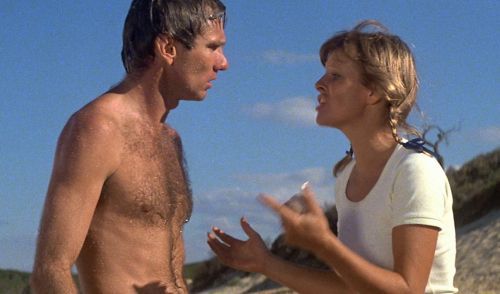
Long Weekend consists principally of the fraught interaction between just two characters, Peter (John Hargreaves) and Marcia (Briony Behets). For the first part of the film there is some doubt of the source of their marital friction, a masterstroke of scripting which considerably adds to the growing unease. Instead, their unspecified frustrations and alienation are externalised, in a process that starts when the husband accidentally runs over a kangaroo, as between them the couple smash eggs, hack at trees, shoot off a gun wildly, and kill a dugong. Marcia wants to return to the comfort of a hotel; Peter does not. Eventually, we discover or deduce the real reasons for their recriminations, but by then a third, more ominous character has entered the drama: that of Nature, who apparently has little time for the self-centred couple so unkindly intruding into her realm.


It’s clear, however, that not everything can be explained even by the end of the film, and indeed one of its strengths is that Long Weekend ultimately refuses, or needs, to explain its mystery. Instead the spectacle of a couple tearing their relationship apart is mirrored by their increasingly aggressive surroundings, as if Nature itself has little patience with their attitudes, either towards each other or their environment - a condemnation of selfishness on a public and private level which seems ever more relevant and modern today in these times. “Spare me the grotty symbolism,” says the wife at one point; but it’s clear that is exactly what, on one level, the couple are: symbols either of an unwelcome intrusion into a natural landscape or of a modern, spiritual ugliness which has no welcome amongst the old. Thus nature’s attacks can be seen as punishment for the couple’s repeated and unthinking transgressions against its fabric, and the unforgiving landscape, elemental, and unhelpful, read as a metaphor for the childless relationship they now endure. But unlike The Birds, there is no feeling that Nature is turning against all of mankind, merely these two, who treat their surroundings with as much care as they do their relationship.

All of this is helped immeasurably by the cinematography, which, despite the film’s low budget origins, is often breathtaking in its depiction of the lurking and elemental. Whether following through the crowded bush threatening the couple, recording the assorted creature attacks, or merely revealing the misty, primeval sunrises that start their eventful days, Vincent Monton's camerawork (apparently at times he used a prototype ‘steadicam’) is a model of restraint, never forcing the pace, merely mounting suspense further without undue pyrotechnics. Add to this an award-worthy soundtrack, which subtly amplifies the threatening groans and rustles of surrounding nature into an ambience of unspoken threat, and you have a film which succeeds often through its sheer intelligence and design. In some ways this reminds one of the early work of John Carpenter, where one looks for threat from within the carefully arranged frame rather from outside it, and where the camera’s unhurried gaze at trapped characters is its own arbiter of terror.


That’s not to say that there are no moments of shock. While largely eschewing horrific set-pieces, Eggleston and de Roche do build in a couple of memorable shock moments such as the fate of the rival campers, while the dugong (a harmless black sea cow, shot as a threat by Peter) apparently making its tortured way, unseen, back up the shore line is truly the stuff of nightmares, and the one that most people remember most about the film.

Blu-ray special edition extras:
  • Audio commentary with executive producer Richard Brennan and cinematographer Vincent Monton
  • Nature Found Them Guilty: examining Long Weekend, a panel discussion with film historians Lee Gambin, Alexandra Heller-Nicholas, Emma Westwood, and Sally Christie
  • Extensive stills gallery, accompanied by audio interview with actor John Hargreaves
  • Original theatrical trailer 

Wednesday, 7 November 2018

Mandy

Cast: Nicolas Cage, Linus Roache, and Andrea Riseborough 

Director: Panos Cosmatos 

121 minutes (18) 2018
Universal Blu-ray region B

Rating: 8/10
Review by Peter Schilling

This action-horror movie begins with King Crimson’s Starless playing over the movie’s title sequence. Captioned ‘Shadow Mountains, 1983’, the reclusive Red Miller (Nicolas Cage) is a lumberjack who lives with beloved wife Mandy (Andrea Riseborough, Brighton Rock remake, WW2 thriller Resistance, sci-fi mystery Oblivion) in a secluded cottage. Their domestic bliss is broken, brutally and fatally, by Californian hippie-guru Jeremiah Sand (Linus Roache, Division 19), the dementedly self-obsessed leader of the ‘Children of the New Dawn’, who capture Mandy for drug-induced slavery.


After she laughs at the insane Jeremiah’s pompous ravings, and his freaky gang of LSD-crazed followers and apparently demonic bikers, poor Mandy is burned alive, and they even force Red to watch this murder. Traumatised survivor Red collects his crossbow, named Reaper, for a hunting trip, and then, much like the cosmic protagonist Thor (in Avengers: Infinity War), he also forges a battle-axe, in preparations for his journey into the underworld. Red embarks on a seek-and-destroy mission, but is obviously in danger of losing his own fractured humanity along the way.


From the director of weird sci-fi thriller Beyond The Black Rainbow (2010), wryly off-beat genre-fest Mandy delivers a grotesque melodrama, a frequently hypnotic and visionary slice of surrealist horror, and is made glorious with often mesmerising cinematography. Panos Cosmatos is the son of George Pan Cosmatos, maker of The Cassandra Crossing, rat movie Of Unknown Origin, Stallone actioner Cobra, underwater thriller Leviathan, and notable western Tombstone. His father’s diverse screen works seem to have profoundly influenced Panos, so there’s a winningly eclectic range of tortuously contrived and darkly gonzo themes in Mandy, including home-invasion shocker, twisty acid-trip, backwoods-psycho slasher, sinister road-movie, fierce black-comedy, and straight-to-hell revenger.


Chaptered by animated interludes, this sophomore effort progresses from a rage of payback to various degrees of psychedelic madness that affect the quite hideously tormented and wild-eyed anti-hero, who eventually becomes likened to a “Jovan warrior, sent forth, from the eye of the storm”. Out of all this moral darkness on a post-industrial wasteland there’s a grisly fairy-tale that slowly and painfully emerges from a gloomy, and yet compelling, nightmare set-up. As the killing spree continues to gather violently arty momentum, from its loony duel with chainsaws to the grandiose finale’s subterranean confrontation that concludes this increasingly mythological journey, Mandy turns into a tour de force of loony masculine violence. Here, Cage proves that he really doesn’t need the burning-skull effects of his two Ghost Rider comic-book pictures to portray another icon of ultimate vengeance.


Mandy is a close rival, in certain auteur terms, to the most cinematic work of John Milius, especially his classic fantasy adventure Conan The Barbarian. Of course, with this kind of bizarre movie, there are bound to be a few critical accusations of premeditated, and not accidental, pretension against the director. Clearly, the creator has lofty aims, but some viewers might not be very sympathetic towards his archly stylistic ambitions, particularly if its varied references (everything from Orpheus to Race With The Devil is evoked here) simply pass them by, quite unnoticed. But Mandy is an example of that extremely rare beast, a wholly intentional ‘cult movie’ candidate that cleverly succeeds in a distinctive objective to appeal to a rather select audience, without losing its general appeal to any other fans of weirdly intriguing fun movies with a startlingly cinematic verve. See it, or die laughing at your own misfortune.

Friday, 2 November 2018

UFO

Cast: Alex Sharp, Gillian Anderson, David Strathairn

Director: Ryan Eslinger

85 minutes (12) 2018
Sony DVD Region 2

Rating: 6/10
Review by Steven Hampton

Unfortunately, in today’s America of Trump-led ignorance, and opposition to rationality and intellectual proficiency, any SF drama that begins with a science lesson, particularly one that involves physics or maths, is asking for trouble. Recent changes to traditions in cinema indicate that details like equations are usually off-putting to all but hardcore genre fans. I don’t want to seem elitist, but a movie like UFO calls for viewers willing to accept a certain degree of scientific rigour that simply does not look particularly dramatic unless the savvy importance of it is grasped in relation to the level of understanding by the story’s educated characters.


However, in this case, if you can stick with the ambitious movie's puzzle solving aspects, the emotional pay-off is quite worthwhile, as UFO is a rewarding tale of one young man’s perseverance against overwhelming odds. Derek (Alex Sharp) is a university student who investigates news reports about a flying saucer, and uncovers a government conspiracy. A mystery surrounds the sighting above an airport. Was the object in sky really an extra-terrestrial spacecraft, or just a rogue drone that was, perhaps, under the remote control of potential terrorists? 


Critical analysis and perspective views are vital to determine the difference between the UFO’s apparent and actual size, and Derek’s innate curiosity soon becomes an intense obsession, with a determination to find the truth about a suspicious removal of air-traffic data from public records and the source of an official gagging-order to silence airport staff.


Thankfully, in addition to championing the young hero’s quest, Ryan Eslinger’s intriguing movie wisely includes big stars like Gillian Anderson, as a professor, and David Straithern - playing an FBI investigator, to deliver salient points about scientific complexity in their varied but characteristic roles as cynical but nonetheless compassionate supporting roles. 


Derek appears to be a survivor of a close encounter with aliens in his childhood. Now he is clearly suffering a primary fixation with UFOlogy in this adolescent crisis. Inspiration can be a challenge, whether sought after, or not, and Derek’s confrontations with official or academic authorities plays out in a similar fashion to the young upstart in Dark Matter (2007), who disputes conventional thinking about natural science. When obsessive Derek tackles government agents, UFO generates a tangential relevance to earth-shaking teen dramas like WarGames (1983).

Tuesday, 16 October 2018

Take Shelter

Cast: Michael Shannon, Jessica Chastain, and Shea Whigham

Director: Jeff Nichols

121 minutes (15) 2011
Second Sight Blu-ray region B 

Rating: 7/10
Review by Christopher Geary  

Jeff Nichols’ second feature, Take Shelter is basically a psycho-chiller about one man’s fall into madness. Working-class dad Curtis (Michael Shannon, The Runaways biopic, and star of director Nichols’ debut Shotgun Stories) lives in a small-town in Ohio with his wife Samantha (Jessica Chastain, Zero Dark Thirty, Interstellar, Miss Sloan, Molly’s Game), and his daughter Hannah (Tova Stewart) - who needs an expensive operation to fix her deafness. 

Curtis begins suffering apocalyptic nightmares of escalating weirdness: yellowy rain, freaky storms, a dog attack, poltergeist activity or alien visitation, and what could be viewed as zombies. He wakes up one morning having wet the bed, but he’s still too ashamed to tell Sam about his dreams. Their family doctor prescribes mild sedatives, and refers Curtis to a psychiatrist in the city but, knowing that his wife would find his absence too suspicious, Curtis agrees to see a local counsellor instead.

Following a panic attack at work, Curtis frets about the paranoid schizophrenia which afflicted his mother, decades ago. He fears that his delusions or hallucinations - which are all psychological horrors, so far - are proof that he’s inherited his mother’s illness. Sam thinks Curtis has gone crazy when he starts digging up their backyard to extend an old tornado shelter into a survival bunker. She doesn’t know about the bad dreams until Curtis has a seizure in his sleep. Once she’s heard about his nightmares and understood his fears about mental health, Sam is level-headed and remains loyal, although she struggles to cope with his bizarre behaviour, and worries about how this may affect young Hannah.


The eerie story reaches its big emotional climax when Curtis is confronted by a former workmate with a score to settle, and the argument unleashes a public outburst by Curtis, ranting a dire warning to the Lions Club community of local families. As if to prove him right later, rather than sooner, there are sirens wailing and Curtis leads his wife and kid into the relative safety of their new shelter. The family sleep through a tornado, but “what if it’s not over?” worries Curtis. It’s the first of many what-ifs that punctuate this drama.


Like a scaled-down indie version of Alex Proyas’ Knowing (2009), Take Shelter lacks grandly spectacular visions of inexplicable disaster, but it more than makes up for that with its mix of real world anxieties (unemployment and recession descend upon Curtis and his family), and the sheer oddness of a gloomy fable about the potential terrors of any sudden climate change. However, Take Shelter is nothing like Roland Emmerich’s blockbuster The Day After Tomorrow (2004). On the genre spectrum, it’s much closer to Larry Fessenden’s excellent The Last Winter (2006), especially when, unsurprisingly, it finishes with an IOU for its end-of-days scenario. 


Sunday, 14 October 2018

Lake Placid: Legacy

Cast: Katherine Barrell, Tim Rozon, and Sai Bennett

Director: Darrell Roodt

89 minutes (15) 2018
Sony DVD Region 2

Rating: 6/10
Review by Jeff Young

A consistently amusing Hollywood monster movie, Lake Placid (1999) was about a giant crocodile, discovered in quiet waters, whose rather unsettling and ultimately man-eating presence proved to be typically stifling in US rural setting, and it enlivens the otherwise routine lives of a mixed group of scientists, park rangers, and local lawmen, all trying to catch it or kill it. A-list stars Bill Pullman and Bridget Fonda are quite amiable leads, and the picture’s special effects were outstanding for such obviously B-movie exploitation material. Although the entertaining adventure unfolded with blatantly formulaic rules and it eventually succumbs to a predictable ending, lots of situations offered a delightful blend of horror and humour with a commendable lightness of touch. The original is well worth hunting down if you want likeably brainless fun that won’t disappoint a family audience.


TV-movie sequels followed with diminishing returns: Lake Placid 2 (2007), Lake Placid 3 (2010), and Lake Placid: The Final Chapter (2012), followed by Lake Placid vs. Anaconda (2015), and the latest addition to this busy franchise, Lake Placid: Legacy (2018). Shot in South Africa, this misadventure claims to follow directly on from events of the original feature, but without including any of the Bickermans, the family whose actions linked the previous movies together. It is nevertheless competent as a monster movie about a 50-foot beast with routinely annoying kids that go trespassing in a clearly quarantined area where the giant, man-eating croc lives.


They find a bunker complex, seemingly abandoned 20 years ago, and then descend quite recklessly into darkened tunnels of the giant creature’s lair. Minotaur maze mythology is touted by allegorical subtext and then flaunted by reference in dialogue, just in case any viewers missed its subgenre relevance. There’s a frantic search for a way out, and any exit will do while misfortunes jinx or dog even their most promising escape routes, and tensions increase to fragment any cooperation between the desperate survivors.


A directorial focus upon characters and their various interactions, with sisterly mutual dependence in marked contrast against macho rivalry of buddies, sadly inhibits much genuine suspense here, so that rather too much of this plays like an urban exploration drama of endurance gone wrong, boasting a few slasher movie thrills (complete with ‘final girls’) that distinguish the mayhem of its explosive climax. Joe Pantoliano appears in a pivotal sequence to explain the corporate back-story elements. Special effects for the dinosaur hybrid creation are pretty good, although the film-makers do tend to rely upon concealing shadows and low-lighting to mask any flaws in these visuals.

Saturday, 6 October 2018

The King

Cast: Elvis Presley, Alec Baldwin, and Rosanne Cash

Director: Eugene Jarecki

107 minutes (15) 2017
Dogwoof DVD Region 2

Rating: 8/10
Review by Andrew Darlington

Anyone can be Elvis. A white jumpsuit with flares and a rhinestone cape. Slur Can’t Help Falling In Love over the karaoke backing-track wearing a big black fake quiff, a curl of the lip, and an ‘Uh-Huh, thanyew very much.’ We can all be Elvis. Except – of course, that we can’t. Elvis was simultaneously a charismatic human being and ‘a mysterious unknowable person,’ as well as being one of the most instantly identifiable icons of our time. 

Elvis Presley straddles the tumultuous post-war decades of traumatic change in a way that continues well beyond his 1977 death. Writers and academics Greil Marcus and Peter Guralnick rationalise and contextualise it all in ways that Elvis himself never could. And here he’s made over into a metaphor for America itself. An embodiment of the American story. ‘Whither goest thou, America, in thy shiny car in the night?’ asks Jack Kerouac. Paul Simon, a far more intellectual and articulate artist than Elvis ever was, ‘walked off to look for America,’ by way of Graceland.


Film-maker Eugene Jarecki uses Elvis as lodestone for a personal quest to hunt out the lost destiny of America on the eve of the Trump disaster. He uses Presley’s 1963 Rolls Royce for the ride, with its Tennessee plate 2C-9279, relaxing into the back-seat upholstery, musing in a kind of awe that ‘the King sat in this car.’ ‘I thought he only drove American cars?’ queries Emmylou Harris, obviously thinking of the Cadillacs that Elvis was in the habit of giving away to strangers. John Hiatt sings the Neil Young line about ‘the King is gone but he’s not forgotten,’ and then gets emotional in the back seat of the Rolls.


The road-trip starts at the shotgun Tupelo shack where Elvis Aaron was born, and where he still shakes the money-maker. ‘Elvis, Elvis, Elvis, that’s all that Tupelo has thrived on. That’s the only thing keeping it alive’ complains one disgruntled resident. And downtown Tupelo where the dirt-po’ white-trash Presley family lived on the racial divide of the black neighbourhood. A time of the America Dream. And an American Nightmare of segregation and Ku Klux Klan lynchings. ‘The American Dream was always someone’s fantasy, and someone else’s drunken nightmare.’ The film splices anecdote, guitars, opinion, rhetoric, analysis and movement. American music, and by extension, global 20th century music, charts the interaction of black and white strands, from the very first shellac record by the Original Dixieland Jass Band, through Bix Beiderbecke, Scott Joplin’s Ragtime, Robert Johnson at the Blues crossroad, into Charlie ‘Bird’ Parker, Miles Davis and Billie Holiday’s Strange Fruit. A fusion… or cultural appropriation, depending on your viewpoint, in the great American democratic experiment founded on the genocide of its native peoples and built by slavery.


Then across the Memphis City Limits where all those southern traditions come together, B.B. King, Martin Luther King, plus the King Of Rock ‘n’ Roll. But also Stax, ‘Soulsville USA’ and Aretha. Jarecki follows young Elvis from the ‘Lauderdale Courts’ social housing project – which is now on the tourist trail, to the Assembly Of God Church where he heard Gospel and the gospel, to Hume High School. Then to Sun Studios where Elvis – the skinny, broke, Momma’s boy, by turns confused and humble, cut That’s Alright Mama. The echo is still there. I could feel it as I paced that same studio floor. Sam Phillips story has been multiply told. Yes, Elvis took from Arthur ‘Big Boy’ Crudup, and Big Mama Thornton’s sophisticated bitching on the original Hound Dog, the forbidden music he hunted out on Beale Street and black radio stations. But he equally took from Bill Monroe’s bluegrass country Blue Moon Of Kentucky.

He was the perfect fusion of both. Philips’ incarnation of the white man with a black soul, totally intuitive, as natural as breathing. Unconsciously, unintentionally, unaware, he was spirit of the times, the personification of a revolution sweeping the nation… and then the world. On the chaos theory principle, he was the ripple that became the tsunami. What did he want? ‘if you’re not happy, what have you got?’ he rhetorically parries an early interviewer. It’s doubtful if he ever achieved that ambition. Instead, Colonel Tom Parker, the Ultimate Carny Barker, pulled ‘the temptation of Christ by the Devil’ scam, the Faustian Pact that monetised and destroyed him. With Elvis as ‘King Kong’ – captured, tamed and exhibited.


King Kong (1933) is accused of being a racist movie. And Elvis meant shit to Chuck D. Marlon Brando, Jane Fonda, and Muhammad Ali put their celebrity on the line for social issues. Elvis never did. Except by example. When he jokily TV-announces Long Tall Sally as ‘by my friend Little Richard. I’ve never met him, but he’s my friend,’ he was normalising respect, that Black Lives Matter. He denied that In The Ghetto was about a black victim of the system, by recalling the poverty of his own beginnings. Hunger has no colour. ‘America has ruled the world with the moving image’ observes a perceptive Mike Myers. With clips of protest, Vietnam, race riots, and news talking-heads illustrating the tale alongside bites from the semi-autobiographical Loving You (1957), the brooding King Creole (1958) and then the family-fun G.I. Blues (1960). Elvis went into the army as James Dean – it says, and came back as John Wayne.


From New York the Rolls drives to Detroit, motor-city where Motown records aimed not to be an R&B label, but the ‘Sound Of Young America’. And where, post-collapse, Eminem takes cultural appropriation into Rap. No-one draws parallels between 8 Mile (2002) and Jailhouse Rock (1957), but they’re there. Then down Route 66 with the Handsome Family, to Hollywood. From the 1968 ‘TV Comeback Special’, to Las Vegas – the ‘radioactive mutation of capitalism’ according to Myers. Through the Greed Is Good years. Elvis with Nixon. Auctioning the triple-Elvis Flaming Star (1960) Warhol print. Elvis commodified, merchandised, bought and sold, over and over. In another unscripted metaphor, even the Rolls breaks down. ‘If Elvis is your metaphor for America, we’re about to OD.’


‘Let’s make America great again. America is great when America does great things,’ the movie voice-overs. Trump’s election is a conundrum. Evidence of a loss of national confidence. From the vibrant violent optimistic opening-up of the Elvis years – the 1950s and 1960s, to a retreat into some mythical past. What does that mean for the state of the nation now? At the time of the record’s release, I resented Elvis remaking Mickey Newbury’s wistfully nostalgic American Trilogy into a jingoistic epic of bombast. Yet strangely it comes close to being a statement of his own belief, and when he sings the line ‘hush little baby, don’t you cry, you know your daddy’s bound to die, all my trials, Lord, will soon be over’ it still have the power to break hearts. If Elvis naively believed in the American rags-to-riches Dream, it’s because his trajectory is its embodiment. Post 9/11 and post-Obama, maybe Mark Zuckerberg and Steve Jobs now perform that function? But no-one can be Elvis, no-one other than Elvis Aaron Presley can ever be that.