Friday, 2 June 2023

The Changeling

Cast: George C. Scott, Trish Van Devere, and Melvyn Douglas

Director: Peter Medak       

107 minutes (15) 1980  

Second Sight 4K Ultra HD

[Released 5th June]

Rating: 7/10

Review by Donald Morefield

Written by William Gray and Diana Maddox, based on a story by Russell Hunter, this is a classy haunted-house movie. It stars the great George C. Scott as piano teacher and composer John Russell, who is still grieving the loss of his wife (Jean Marsh) and daughter in a road accident (a tragedy as the film begins), when he moves into an old mansion to start his life over. There’s a mysterious presence in this house that “doesn’t want people," and Russell discovers that he must solve a 70-year-old murder before he can find peace within himself...


Cinematographer John Coquillon does a superb job, capturing quintessential spooky angles in the house, especially in the narrow confines of corridors leading to a dusty and heavily cobwebbed attic room - where the aforementioned murder occurred. Although it’s hard to accept some of the intuitive leaps made by Scott’s heroic ghost-hunter as valid dramatically, there’s no escaping the atmospherics conjured by Peter Medak’s old-fashioned, yet nonetheless highly astute and non-exploitative, direction.


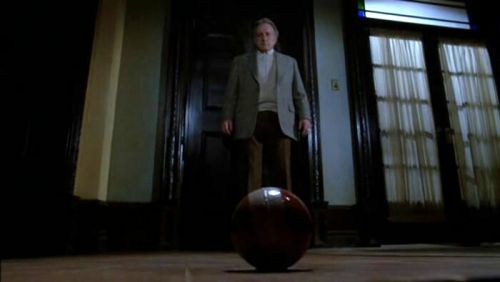
This is a supernatural chiller, full of implied dangers, not a horror movie with lashings of gore. Its accumulation of strange incidents (curious banging noises, breaking windows) builds into an undeniable sense of unease and disquiet, which is neither stabilised nor dispelled by the séance where a medium’s automatic writing spells out doom for the villain of the piece. If you can watch the child’s red ball come bouncing downstairs, again - even after Russell has been out and thrown the ball away - without feeling a shiver, your central nervous system may require medical attention. 

Melvyn Douglas is stalwart, and burdened with guilt over the amorality of his inherited wealth, as the aged senator with a secret past. Trish Van Devere (who was married to Scott at the time) is good as a sceptical local historian, and there are minor roles for Barry Morse, Eric Christmas, and John Colicos as an ill-fated police detective.

Extras:

  • New 4K scan and restoration.
  • Interview with Medak by filmmaker Adrian Garcia Bogliano at Morbido Fest 2018
  • Exile On Curzon St - Medak on his early years in swinging London
  • The House On Cheesman Park - the haunting true-story of The Changeling
  • Commentary by Peter Medak and producer Joel B. Michaels
  • Commentary by Marilyn Burns, Allen Danziger and Paul A. Partain, with art director Robert A. Burns
  • The Music Of The Changeling - interview with music arranger Kenneth Wannberg
  • Building The House Of Horror - interview with art director Reuben Freed
  • The Psychotronic Tourist
  • Master of horror Mick Garris on The Changeling

Sunday, 7 May 2023

The Texas Chain Saw Massacre

Cast: Marilyn Burns, Edwin Neal, and Gunnar Hansen 

Director: Tobe Hooper

83 minutes (18) 1974  

Second Sight Blu-ray   

Rating: 9/10

Review by Christopher Geary

The archetypal low-budget shocker that redefined 1970s’ cult horror, The Texas Chain Saw Massacre maintained its fearsome genre reputation well into the video boom era. But in the wake of other franchise-starting competitors, like Halloween (1978), The Evil Dead (1981), and such later classics as Day Of The Dead (1985), and Hellraiser (1987), Tobe Hooper’s postmodernist American gothic stood apart from contemporary slashers, or zombie gore-fests, because the film’s greatest strength was always its basis in a vile but true story, of 1957, about Wisconsin grave-robber Ed Gein. Although the very same ghoulish crimes had previously inspired Hitchcock’s legendary Psycho (1960), Hooper’s more sensationalist approach benefited greatly from being made in colour, with ruthless exploitation of lurid terrors, following the grinding atmosphere of unease before extreme violence begins. Whereas Hitchcock tempered traditional suspense with gallows humour, centred on crazy loner Norman Bates, forever haunted by his mother, Hopper delivers an exceptionally vivid treatment about serial kills by an extended hillbilly family of grotesque outlaws.

Marilyn Burns, who went on to star in Cronenberg’s Rabid (1977), plays Sally Hardesty, one of a van load of young people who fall victim to the homicidal Sawyer clan. TCSM is actually quite low in blood and gory scenes, partly because Hooper’s film crew lacked the technical resources of Hollywood studio productions like Friedkin’s notorious The Exorcist (1973), where cutting-edge special make-up effects enabled fantastical and supernatural stunts. However, storytelling against a background of cannibalism and necrophilia grants Hooper’s movie of broadly realistic horrors a darker sense of dread when monstrous ‘Leatherface’ (Gunnar Hansen), goes about his grisly business. This slaughter-house mentality is keenly invested with a terrifying lunatic vigour that no amount of religious chanting, or chilling demonic-possession, could possibly match for sheer visceral morbidity.

Personally, I think that most of TCSM is often deliriously funny, despite its unrelenting intensity. Its displays of black-comedy mayhem are crazier characters than most of Monty Python’s TV and violent-movie adventures, in particular their Arthurian knockabout Monty Python And The Holy Grail (1975). Hooper transforms a rural house into a ‘Grand Guignol’ theatre setting for ghastly wide-eyed nightmares, creating a splattery experience that eventually seemed to shape Wes Craven’s directing career from The Last House On The Left (1972) and The Hills Have Eyes (1977), all the way to A Nightmare On Elm Street (1984) and The People Under The Stairs (1991).    

More than simply a film franchise, TCSM is a sub-cultural phenomenon. It has spawned a veritable industry of sequels, remakes, and spin-offs, and strongly influenced generations of cross-genre filmmakers eager to exploit a seemingly insatiable audience for gruesome imagery, whether intended for comedy or shock values. It can be viewed as a confrontation with ultimate evils in corrupted souls, or even as allegory of how death and trauma in warfare breaks down humanity in any survivors. As the Sawyers' saga approaches its 50th anniversary, this two-disc Blu-ray edition ensures the primal slice of horror-show history is now readily available for critical reassessment.        

Bonus material:

  • A new presentation featuring additional restoration work produced by Second Sight.
  • New commentary by Amanda Reyes and Bill Ackerman
  • Commentary track with Tobe Hooper
  • Commentary with cinematographer Daniel Pearl, editor J. Larry Carroll, and sound recordist Ted Nicolaou
  • Commentary with Hooper, Pearl, and Gunnar Hansen
  • Commentary with stars Marilyn Burns, Allen Danziger, and Paul A. Partain, plus art director Robert A. Burns
  • The Legacy of The Texas Chain Saw Massacre - a new feature-length documentary
  • Behind The Mask: Alexandra Heller-Nicholas on The Texas Chain Saw Massacre
  • The Shocking Truth documentary 

Disc two:

  • Cutting Chain Saw with J. Larry Carroll
  • Granpaw’s Tales with actor John Dugan
  • Horror’s Hallowed Grounds
  • Flesh Wounds: seven stories of the saw
  • Off The Hook with actor Teri McMinn
  • The Business Of Chain Saw with production manager Ron Bozman
  • House Tour with actor Gunnar Hansen
  • Tobe Hooper interview
  • Kim Henkel interview
  • Deleted Scenes
  • Trailers
  • Stills Gallery

Wednesday, 22 March 2023

Martin

Cast: John Amplas, Lincoln Maazel, and Christine Forrest

Director: George A. Romero       

95 minutes (18) 1977

Second Sight 4K Ultra HD

[Released 27th March]

Rating: 8/10

Review by Max Cairnduff

George A. Romero is best known for his zombie movies. Apparently, though, his own favourite among his films is the less well known Martin. Having now watched it (for the first time) I can see why he’s so taken. It’s an exceptional work that’s bleak, sad, disturbing, and challenging. 

John Amplas plays the eponymous Martin. When the film begins he’s on a train to Pittsburgh. He sees an attractive fellow passenger who has paid for an overnight cabin. He fantasises about her inviting him in and making love to him. The reality is that he rapes and murders her. The woman struggles to escape, but is drugged unconscious and Martin then drapes her arms over him as if she were reaching for him in passion. Eventually he slits her wrist and drinks from it. 

That’s the first five minutes of the film. Already the viewer can see that Martin is a rapist, a murderer, and a deluded fantasist. The question though is whether that’s all he is or whether he’s also a vampire. 

When the train pulls in, Martin is greeted by elderly relative Tada Cuda (Lincoln Maazel), in whose house he will be staying. The house is festooned with garlic and crucifixes, and Cuda explains to Martin that he will save him then destroy him but that, if he feeds on the people of the city, he will destroy him without saving him. Cuda also warns Martin not to speak to the other person who lives in the house, Martin’s cousin Christina (Christine Forrest). Cuda clearly believes Martin is a vampire, even addressing him as ‘nosferatu’. Christina’s view is that Martin is simply mentally ill and that Cuda is making it worse. 

I’m obviously not going to repeat the whole plot here. The above is merely the set-up. The question this raises is whether Martin is a profoundly psychologically-damaged teenager who is enabled in his fantasies by an ageing relative’s belief in them, or whether he is as he and Cuda believe: an 84-year-old who has kept young by drinking the blood of others.

There are hints in the film that Martin may be just what he says he is. Cuda refers to others in the family similarly afflicted; suggesting a genetic condition which Martin may have inherited. Cuda is keen that Christine does not have children in case she carries the condition silently within her. Cuda, though, is not reliable. He believes too in the old superstitions, in garlic and exorcism but as Martin says to him again and again there is no magic. If Martin is anything more than just a boy he is a natural phenomenon. If we can’t trust Cuda on the magic though, can we trust him when he claims that vampirism runs in the family? 

As the film progresses, Martin forms a sort of quasi friendship with a bored and lonely housewife (played by Elyane Nadeau). He takes to phoning a local radio shock-jock and talking about how one day he’d like to do “the sexy stuff” with someone who’s awake. And every now and then he gets hungry, drugs a protesting and terrified victim and murders them. He may or may not be a vampire, but he is a monster. 

Pittsburgh here is a decaying industrial city. Nobody appears to have any prospects. Christine goes out with a philandering mechanic she doesn’t love in the hope that he may at least take her somewhere better. The housewife has nothing to look forward to other than the possibility of an affair with Martin, who has taken a job as a delivery clerk in Cuda’s grocery store. Martin's fantasies (or perhaps memories) are shot in black and white and have him dressed in elegant 19th century clothes, chasing beautiful women in flowing nightdresses or chased in turn by torch-wielding mobs. His reality is dingy buildings, filthy streets, ugly murders, and flights from the police. 

The horror scenes here are unusually effective; in part because they’re filmed in an almost documentary-style with the camera staying on the struggling victim long after most films would have cut away or opted for a sudden gory resolution. There’s also a realism to it all which again makes it all the more unpleasant. Zombies don’t really exist and nor do vampires of course, but violent sociopaths with delusions do and that may be all that Martin is. There’s a squalor here that contrasts with the romance of Martin’s dreams or the complex architecture of Cuda’s beliefs. 

The performances are solid. Amplas is convincingly pathetic as Martin, at times evoking real pity showing again what exactly it is Martin does to people and how horrible it is. Maazel is on fine form as Cuda, stubbornly sticking to his beliefs, despite the evident fact that Martin is unaffected by sunlight, crucifixes, priests or garlic (he even bites a clove at one point, to show Cuda there’s no magic). 

Forrest convinces as the cousin who wants to help Martin, but not enough to really go out of her way for him. Nadeau is persuasive as a housewife trapped in a loveless marriage and bored beyond endurance. These four central-performances are the heart of the film, each a study in delusion or desperation. 

Romero never did another film quite like Martin. That’s a great shame because it is very good. It’s rare for a horror film to actually make uncomfortable viewing, but at times Martin is just that. The ambiguity as to what Martin actually is denies the viewer any reassuring answers, and there’s a banal pointlessness to it all which again makes it in places a difficult watch. People die in fear and pain. Those who live don’t enjoy it much. If anything beyond psychopathy is going on it’s just some hereditary condition, and there’s no romance to that. 

Martin is a defiantly unromantic film. It’s the antithesis of the vampire as glamorous creature of the night. Here, far from being a magnetic seducer, Martin has to drug women to sleep with them. When awake he can barely answer their questions. He’s no prince of the night; he’s just an inadequate who likes to kill women. Against that, whether he’s 84 or not is almost irrelevant. 

Second Sight 4K restoration supervised and approved by DOP Michael Gornick. 

Disc extras: 

  • Taste The Blood Of Martin: new feature-length documentary, including location tour
  • Scoring The Shadows: new interview with composer Donald Rubinstein
  • Making Martin: A Recounting
  • Commentary by George A. Romero, John Amplas, and Tom Savini
  • Commentary by Kat Ellinger
  • Commentary by Travis Crawford
  • ‘J Roy - New And Used Furniture’: short film by Tony Buba
  • Trailers and TV adverts

Monday, 27 February 2023

Cursed Films

Featuring: Richard Donner, Gary Sherman, Linda Blair

Director: Jay Cheel

141 minutes (15) 2020 

Acorn / Shudder Blu-ray   

Rating: 7/10

Review by Christopher Geary

This documentary show concerns five peculiar examples of American cinema with specific genre themes that, usually over the decades since, but sometimes during the sensational publicity upon first release, have acquired their own mythology. Often with meta-fictional aspects supporting their now legendary status, public beliefs or superstitions led to these allegedly ‘jinxed’ movies providing easy promo hype when odd coincidences are confused with causality.     

The most obvious case is Tobe Hooper’s Poltergeist (1982), plagued by macabre tales - seeming to mirror its own plot - about actual human skeletons being used on the movie’s sets for the ghastly finale’s scenes of unearthed coffins. The so-called ‘curse’ element did not appear fully until the original’s young star Heather O’Rourke died, age 12, just before sequel Poltergeist III (1988), directed by Gary Sherman, was released. Horror attractions include almost obsessive fascinations of location tourism, as the fictional Freeling family’s house in California became like an infamous Mecca for overly curious fans. Building upon the notoriety of spooky thrillers, props from various productions are now considered very collectable - especially if they are not rare, or reproductions, but genuinely unique items. An interview with F/X artist Craig Reardon explains how low-budget constraints for many genre movies resulted in skeletons being sought from medical supply-houses, because it was always cheaper than paying sculptors to make realistic bones from scratch. 

Richard Donner’s The Omen (1976) tackled Anti-Christ prophecies like nothing before it, and managed to summon plenty of stranger-than-fiction verve from reportage that plane flights, carrying cast or crew, were hit by lightning. Other incidents where deaths, related to the production, were narrowly avoided fired up over-stimulated imaginations. Thinking around such accidents was coupled with dire warnings from Satanists about not tempting fate. These diabolical expectations sparked ‘pattern recognition’ behaviours from a public appreciation of The Omen, that was certainly glossy, and slicker than previous ‘evil child’ shockers, but still a confrontational milestone for Hollywood’s mainstream. Although this episode of Cursed Films has rather a lot more about other horrors in general, so it’s not just about The Omen, and a subsequent franchise of sequels, it’s nonetheless interesting to ask: does watching this TV series prompt viewers to see the original movies again? 

Tragedy can be cynically exploited, or avoided, but sensationalist headlines nearly always provide ‘free’ publicity, so it’s really no surprise when studios choose to advertise horrors for maximum chilling affects. William Friedkin’s classic, The Exorcist (1973), had raised an even greater controversy. Its casting of Linda Blair as the innocent victim of demonic possession quickly spawned a wealth of urban legends from social anxieties and erosions of sceptical thinking. Does this movie assert credibility for supernatural beings, and their Catholic opponents? Obviously, a fine performance by Max von Sydow as a priest helped to realise many of the delirious but worrying events within the movie. However, there’s a blundering dilution of intelligent, investigative criticism here that foolishly undermines the unquestionable cultural impacts of the landmark movie by reducing ‘exorcism’ rituals to a dim lunacy of reality-TV styled ‘entertainment’.

Anthology production Twilight Zone: The Movie (1983) was profoundly disturbed by its helicopter crash during filming of stunts for Vietnam War scenes in a time-travel segment directed by John Landis. The tragedy killed two children and actor Vic Morrow, but Landis managed to finish editing the story before lengthy court cases began. Despite changes to safety regulations, that have long since transformed the varied ways that helicopters are used in movies and TV, this episode of Cursed Films unwisely gives too much attention to Lloyd Kaufman (and his Troma movies), who has no connection to the accident, or any of the legal actions in its aftermath.  

Morbid curiosity haunts The Crow (1994), now a part of that decade’s cycle of superhero films, because actor Brandon Lee died while making it and this movie was expected to establish his career as Hollywood’s top action star. For this gothic drama of death and resurrection, it’s particularly notable that Brandon’s father, martial arts legend Bruce Lee, also died on the brink of international stardom, while making a kung fu movie. Rob Cohen’s excellent biographical drama, Dragon: The Bruce Lee Story (1993), adds details to the Lee family’s mythology fuelled by tabloid hysteria, and hyped by conspiracy theories of Chinese-mafia plots. Michael Berryman speaks honestly about his casting as 'Skull Cowboy' for The Crow, and laments how mistakes were made on the set, but denies the possibility any curse. In the end, we might wonder if completion of stalled-by-tragedy movies following the loss of cast members is truly honourable or not.     

A second season of Cursed Films looks at The Wizard Of Oz, Rosemary’s Baby, Stalker, The Serpent And The Rainbow, and Cannibal Holocaust.

Thursday, 1 December 2022

Mad God

Cast: Alex Cox, Niketa Roman, and Satish Ratakonda 

Director: Phil Tippett

84 minutes (18) 2021 

Acorn / Shudder Blu-ray 

[Released 5th December]   

Rating: 9/10

Review by Christopher Geary

Is the curious art of stop-motion animation due for a revival? It’s not often that animated films get adult certificates, but Mad God is a prime example of a winningly experimental form. It’s dazzling movie-making by Phil Tippett, who did stop-motion effects for ED-209 in RoboCop (1987), and its gloomy sci-fi horror is more than inventive enough to deliver a weirdly composed, wholly anarchic, underworld mythos, influenced by Czech directors Karel Zeman and Jan Svankmajer, and also David Lynch’s amazingly bizarre Eraserhead (1977). There’s plenty of muttering, and highly emotive vocal effects, but no dialogue to denote characters. Expressions or body-language conceal as much as they communicate directly, yet lots of brutal judgements and obvious misery are messaged.  

A pet-project begun 30 years ago, this production was shelved when its model animation style became unfashionable in the 1990s, as computers conquered the studios’ tool-kits. Jungian psychology is a recurring theme here, much like anything by Jodorowsky, while writer-director Tippett crafts a dynamic yet brooding quest-saga combo, with Art-house references and uncanny genre riffs that emerge rapidly during a blitz-o-mation of grisly or surreal images. Mad God concerns a ‘terrorist’ carrying a time-bomb, but it’s a mission-movie only in the sense that a Quay brothers’ narrative, like Street Of Crocodiles (1986), tells any kind of biographical story. Just imagine a disturbing Hieronymus Bosch puppet-show version of something stranger called ‘Escape From Noo-Yuck’, where nothing more than cruelty and misfortune favours the bold. 


The killer descends into and through the bowels of a hell-scape where bio-mecha terrors, and mutant grotesques, casually churn up waves of relentlessly violent splatter effects. There’s an eye-rolling despair here, with creatures born only to die horribly struck by a meaningless fate, while the protagonist discovers evidence of many other predecessors, and drives on through an apocalyptic war-zone of rusty tank battles. Astonishingly eerie black-comedy tracts readily evoke Terry Gilliam’s wildest fantasies of doomed heroism, particularly 12 Monkeys (1995). Alex Cox, auteur of Repo Man (1984), essays a loony boffin displaying Coffin-Joe styled fingernails, as an apparent dictator of a shadowy militaristic realm, far above the subterranean levels where the cursed assassin journeys into a ghastly, gothic labyrinth of death-traps and damnation alleys. 


Mad God is like garage-Harryhausen meets grind-house Giger, bored with fantastic alien erotica. A nurse (Niketa Roman) rescues a mewling newborn... something, but even that nightmare nativity offers nothing to hope for as this multicultural wasteland devours any chance of evolution. Picture factory-ruins extruding huge slabs, perhaps cousins of those famed monoliths of Kubrick’s magnum opus, 2001: A Space Odyssey (1968), for a line soon toppled over like giant dominoes, and later tumbling like cosmic dice thrown out of a yawning Black Hole. Tippett’s masterly approach to mysteriously horrific absurdities ensures a 100% cult movie. Don’t blink, or you’ll miss some amusing bits of extraordinarily gruesome fun. 

This excellent Blu-ray includes a first-class package of bonus material:

  • Commentary track by Phil Tippett and Guillermo del Toro
  • Cast & crew commentary
  • Interview with Tippett
  • Mad God influences & inspirations
  • Maya Tippett’s The Making Of Mad God
  • Maya Tippett’s Worse Than The Demon
  • Academy of Art University & Mad God
  • Behind-the-scenes montage
  • Behind-the-scenes photo gallery

Tuesday, 23 August 2022

Dog Soldiers


Cast: Sean Pertwee, Kevin McKidd, and Emma Cleasby

Director: Neil Marshall

105 minutes (15) 2002

Rating: 9/10

review by Emma French  

The opening scene of Dog Soldiers presents a clichéd scenario of an amorous couple in a remote spot, far from help or other people, being brutally attacked by an unseen and non-human predator. The reasoning behind this unimaginative start becomes a little clearer when the soldier-protagonists arrive on the scene. The contrast emphasises that whilst a couple of horny campers might have no chance against a bloodthirsty group of monsters, the British army’s hardest might have a better shot. With no particularly obvious hero, you can never be quite sure which of the soldiers is going to make it to the end of the picture un-mauled. Given the savagery of the first couple of attacks, the odds of any of them surviving seem poor. 

Writer and director Neil Marshall has a strange film pedigree: he was the make-up artist for TV’s Smack The Pony, and the driver on John Carpenter’s Ghosts Of Mars, as well as writing and editing the 1998 feature Killing Time, before he made this film. Marshall’s directorial inexperience does not show and he converts a limited budget into a distinct advantage. Fleeting images of giant wolf-men put the CGI clone armies of George Lucas to shame. Believing that there are real actors inside the wolf costumes adds a visceral dimension that, back then, was difficult to recreate with computer graphics. On a gigantic budget this was the lesson Ridley Scott took to heart in Gladiator, comprehending that CGI should provide enhancement rather than the whole picture. Old-fashioned gore and suspense is still hard to beat. 


Sean Pertwee is surprisingly good as Sergeant Harry Wells, and rather suits the role of a partially-disembowelled action-man. Chris Robson is the most memorable and endearing of the other soldiers as jocular Geordie Private Joe Kirkley. Emma Cleasby provides some bland but welcome female interest as Megan in an otherwise testosterone-stuffed film. As with the John Landis classic An American Werewolf In London, there is a degree of poignancy too. Half man as well as half animal, for the werewolves their condition is a handicap and an affliction that they must philosophise, theorise, and live with, as best they can.

It is good to see a British film competing so effectively against the slew of franchised Hollywood’s ironic horror output. It’s evident from the very start that this is a straightforward, worthy contribution to subgenre movies (that includes Predator), although there is plenty of humour here too. Perfect for Halloween viewing, Dog Soldiers fares as well on the small screen as it did at the box-office.


Rating
: 8/10

review by Michael Lohr 

This is a very entertaining, realistic horror movie about werewolves, the best one since John Landis’ An American Werewolf In London, and Dog Soldiers marked a much-needed return to the traditional horror movie genre. Written and directed by Neil Marshall, and co-produced by Christopher Figg (Trainspotting, Hellraiser), it’s a classic tale of survival, in much the same regard as Night Of The Living Dead, and Alien. Bob Keen’s Image Effects did a fantastic job at making the werewolves of look realistic and terrifying. The odd thing about this film is that it contains quite a bit of humour, but well-written humour that fits in superbly with the stark realism of the terror.

The movie is set deep in the forests of Scotland, and stars Sean Pertwee (Event Horizon), Kevin McKidd (Hideous Kinky), and Liam Cunningham (RKO 281), as a group of soldiers are out on a training exercise when they stumble up the bloody, gut-strewn remnants of a ‘special ops’ camp. What ensues is two hours of panic-stricken frenzy deep in the dark of night. The werewolves themselves were dirty, dishevelled, and downright nasty. The cinematography is dark, moody, haunting, and splendid. 


I heard some American critics say that this movie was ‘too British’ for their tastes. Well, I’m American and I say, sod off you daft buggers! If this movie were US made, we no doubt would have had Britney Spears prancing about with enough boy-band cameos to make me gag on my popcorn. Simply, this is the best horror film that I have seen in a long time. 


Disc extras: 

  • This restoration for 4K UHD (with Dolby Vision HDR) release is approved by director Marshall, and cinematographer Sam McCurdy
  • Archive commentary by Marshall
  • Archive commentary with producers David E. Allen and Brian O’Toole
  • New commentary by Alison Peirse
  • Werewolves, Crawlers, Cannibals, And More - new 40-minute interview with Neil Marshall
  • A History Of Lycanthropy - Gavin Baddeley on werewolf cinema
  • Werewolves, Folklore, And Cinema - video essay by Mikel J. Koven
  • Werewolves vs. Soldiers - making of Dog Soldiers with Neil Marshall, producers Christopher Figg and Keith Bell, actors Sean Pertwee, Kevin McKidd, Darren Morfitt, Leslie Simpson, and Emma Cleasby, special-effects artist Bob Keen, and more.
  • A Cottage In The Woods - interview with production designer Simon Bowles
  • Combat - short film by Neil Marshall
  • Deleted scenes and gag reel with optional commentary by Marshall, plus trailers, photo gallery. 


Monday, 8 November 2021

Every Last One Of Them

Cast: Richard Dreyfuss, Paul Sloan, and Jake Weber  

Director: Christian Semsa  

82 minutes (15) 2021

101 Films DVD Region 2  

Rating: 6/10

Review by Jeff Young

As if he’s being starved of headline roles in studio productions - much like Nicolas Cage and Bruce Willis, nowadays - faded Hollywood star of the 1970s Richard Dreyfuss lends his familiar combination of wits and gravitas to lower-budget movies such as the recent feminist manhunt Daughter Of The Wolf. Even on autopilot, his intelligence and intensity remains watchable as Dreyfuss cruise through his seventies. In this likeably atmospheric shoot ’em-up thriller, he plays Murphy, a former military commander and mentor to an ex-soldier and desperate hero. 

Every Last One Of Them starts with a bar-room brawl centred on the stranger in town, a serious tough guy from Vegas, Jake Hunter (Paul Sloan, Stiletto), who quickly escapes from custody, and steals a police car to continue searching for his missing daughter. Of course, he’s driven to become a proverbial one-man army, clearly following the subgenre trend established by Rambo, Commando, and Taken, along with other such exploitation-cinema inspirations. 

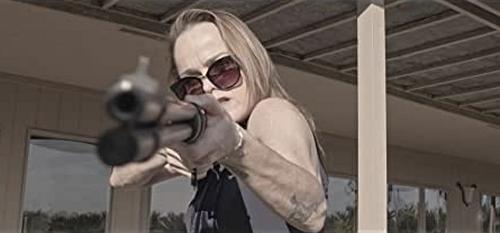
Chief villains here are Nichols (Jake Weber, Those Who Want Me Dead), and his weirdly-psycho sister Maggie (Taryn Manning, Hawaii Five-0 remake), who are the main targets for Jake’s instinctive suspicions and unstoppable wrath. In pursuit of local justice, sheriff Kim (Mary Christina Brown) is firmly, if not formally, on hero Jake’s side. Michael Madsen does his usual character-actor stuff in a minor supporting role. 

ELOOT delivers a grim & moody build-up to its standard revenger plot, with extra layers of intrigue that expose county political corruption. Christian Sesma, maker of Vigilante Diaries, Mind Blown, and Take Back, directs with an eye for sleazy imagery and messily violent details. With its haunting tragedy already done, and then revealed in flashbacks, what’s most important here is the headlong chase towards a gun-point reckoning of quasi-operatic terrorism, bolstered by a suitably noisy music score, before some bloody do-or-die retribution. 

Despite working under pandemic constraints and often being limited by filming back-yard scenery, there’s plenty of technical and twisty-narrative evidence here that resourceful Semsa keeps on improvising as a slick B-movie stylist, if never quite a genuine auteur, balancing cool and cruel characters and many action-packed sequences, with each new effort.