Wednesday, 14 March 2018

The Adjustment Bureau

Cast: Matt Damon, Emily Blunt, Terence Stamp, Anthony Mackie, and John Slattery

Director: George Nolfi

101 minutes (12) 2010
Widescreen ratio 2.35:1
Universal DVD Region 2

Rating: 6/10
Review by Andrew Darlington

You have to love Dick. While everyone else in the SF continuum was still clumping on about Moon-bases and adventuring to Mars, he - and well, maybe J.G. Ballard too, was already into the next level of weirdness. Which is why Dick only later came into posthumous public consciousness, but did so with a vengeance - Arnie’s lumbering Total Recall, A Scanner Darkly, Tom Cruise’s Minority Report, Screamers - plus one of the finest SF films of them all, Ridley Scott’s Blade Runner, are all derived from Philip K. Dick’s paranoid vision.

Now here’s The Adjustment Bureau which might just be described as a romance of star-crossed lovers. Although the original short story by Dick - in Orbit magazine (September 1954), wasn’t a romance. Nothing like it... But not much of that original plot remains. What stays intact is the theme. The idea; the concept. That familiar Dickian riff that life is not as we know, or understand, it... This time, history is not a random process. It is controlled, edited and manipulated. And the determining factor here is a spilled coffee. David Norris (Matt Damon) is tipped to be New York senator when his campaign is derailed by a prank mooning film-clip from his college years.

Already the youngest-ever congressman, he’s the kind of clean-cut JFK honest politician you only ever find in US productions. He’s snub-nosed in what some might consider an endearingly cute way. He meets a girl in a black dress as she's coming out of the cubicle in the gents, where she’s been hiding to avoid hotel security. She is Elise (Emily Blunt), who does contemporary dance for the ‘Cedar Lake’ ballet and has something of the arty-cookiness Diane Keaton deployed to such effect in Annie Hall. “Do I know you?” he asks.

No, but he soon will, despite the vast omnipotent cosmic forces ranged against them. They kiss; then she disappears, hotly chased by security. This is where the coffee comes in. With his election plans scuppered he prepares to take the bus to a dull meeting about solar panels. But his movements are being monitored by mysterious ‘men in black’. It’s they who conspire that he must spill coffee on his shirt at 07:05, setting up a chain of consequences. As it is, the operator responsible - Harry (Anthony Mackie) nods off on the bench, and misses the vital moment, an omission that initiates an ‘endless ripple effect’.


David catches the bus he was supposed to miss, finds himself sitting next to Elise, eyeing up her attractively abbreviated miniskirt. They are reunited. Then, arriving at the office he finds the personnel frozen into immobility and being scanned by the men in black. He’s seen behind a curtain he’s not even supposed to know exists. The correctly spilled coffee would have ensured none of this happened. Now, they must level with him, and warn him off. So they explain that they are the Intervention Team who, “make sure things happen according to plan.” They monitor the world.

They can reset and recalibrate reality. They have ledgers with dots moving across grids to represent the intersection of lives. Some things are meant to happen. Others are not meant to happen. He is destined, it is hinted, for the Presidency. She is to become a world-renowned dancer. His career needs his raw hunger. She would fill the hunger, and de-motivate him. Hence their love is not part of the plan. So he tries to give her up, he really does. But, like the lyrics from a cheesy pop-tune, theirs is a love so strong it breaks all the rules. Three years later he's back on the campaign-trail when he glimpses her on the street, and, despite deliberate obstruction, it begins again.

The ‘adjuster’ Thompson (an acidic Terence Stamp) stands at the foot of their bed as they sleep together. “Whatever happened to free will?” David protests. Only to be told “you don’t have free will. You have the appearance of free will.” ... “All I have is the choices I make,” he argues back, “and I choose her.” At the same moment she falls and sprains her ankle, a warning that they’re capable of wrecking her dance-career if events are not kept on-plan. Again, against his better judgment, he walks out on her. Some critics detect trace-elements of Christian mythology in the film’s ‘free will’ versus ‘determinism’ equation, but it’s not necessary to buy into such superstitious hokum to be intrigued by the concept. Are they angels? Not quite, although some theologies have seen them that way.


Are they an ultimately benevolent extraterrestrial race shepherding truculent delinquent humanity towards a better evolutionary maturity? Or a secretive Dan Brown conspiracy-cabal exerting a tentacular influence in furtherance of their own control-freakery objectives? In truth they seem more a dull grey bureaucracy, headed by the Chairman - no messing here with the non-gender-specific ‘Chair’ or ‘Chairperson’. No, it’s the antique Judeo-Christian male authority figure. And they’ve been guiding history forever. Whenever they step back the Roman Empire collapses into Dark Age barbarism, or Nazi dictators destabilise the world into global war. But Norse pagan mythology also invented the Norns, the three Fates who weave the individual threads of our lives into the vast tapestry of existence.

Harry Harrison, with Kathleen Maclean wrote a charming fantasy The Web Of The Norns about it. So it’s a recurrent idea; a useful metaphor. And 11 months later, David is ahead in the polls. While in a spiteful rebound she’s engaged to her ex. The Plan is back on track. The credits for the film include visual effects, but it’s less CGI spectacle than it is human story. The main visual gimmick is the magic doors by which the Adjusters navigate around the city, a network explained in the DVD bonus featurette, Leaping Through New York, although in truth it’s a cinema-splice no more impressive than stepping into, and out of the Tardis.


Meanwhile, only Adjuster Harry has doubts, with his sense of aggrieved responsibility bothering him. He confides to David that the intensity of their love is due to the fact that in a previous draft of the ‘Plan’ they were destined to be together. Their intense attraction is a “remnant from old plans.” So the Plan is not inflexible. It can be amended. Harry also helpfully divulges the secret of the dimensional ‘doors’ - turn the doorknob clockwise and wear a fedora, enabling David to give The Graduate’s wedding-prevention dash a sci-fi twist.

One step through the Museum of Modern Art, the next into the Manhattan Pumping Station, a race through the rain in and out of doors, as the Bureau pursues, and then calls in the Intervention Team for an emergency reality-reset. In a reprise of their first meeting, David finds a troubled Elise again, in the courthouse bathroom, reuniting the lovers. Like the lyrics from another cheesy pop-tune, he sort-of tells her, “if loving you is wrong, I don’t want to be right,” and they escape through the door to the foot of the Statue of Liberty, where they determine to take their protest direct to the Chairman.

Towards a final confrontation on the roof of a building overlooking Central Park, and the Plan is rewritten in their favour. Strength of will and determination, it seems, can change your destiny. Very little of that is present in the original Philip K. Dick short story - just the idea of the omnipotent ‘Adjustment Team’ monitoring and editing, altering and guiding human lives. So when the Internet goes down, and you think it’s chance. Sometimes, just sometimes, it is. There was once a cartoon in New Musical Express of a nerdy sci-fi geek getting seriously menaced for innocently enquiring ‘do you like Dick or Moorcock?’ Well, out beyond the geek-o-sphere we all love Dick now. Unless we have all just been ‘adjusted’ that way?


Saturday, 3 March 2018

Geostorm

Cast: Gerard Butler, Abbie Cornish, Jim Sturgess, Ed Harris, and Andy Garcia

Director: Dean Devlin

109 minutes (12) 2017
Widescreen ratio 2.35:1
Warner Blu-ray region B

Rating: 6/10
Review by Christopher Geary

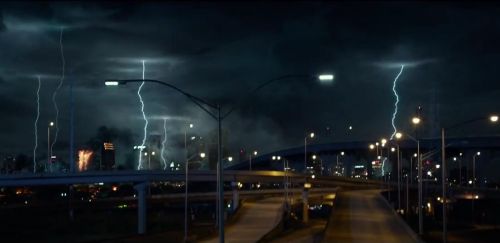
The petulant Mark Kermode might consider this to be the stupidest movie he’s ever seen, but Geostorm is actually just a popcorn style sci-fi adventure, and epic disaster movie of global proportions. This rattles happily along from a wrecked city to a threat of worldwide cataclysm and doesn’t outstay its welcome. Roland Emmerich’s usual producer makes his directorial debut here, and this picture's centred upon the planetary scaled response to a series of climate-change devastations in 2019.  


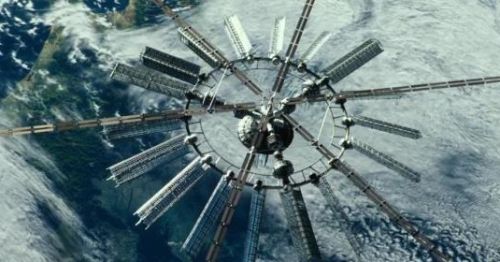
The solution is called Dutch Boy, a network of satellites in low Earth orbit (LEO) positions, using pseudo-science and some practically magical technologies, that ‘zap’ natural catastrophes like tornados, blizzards, and monsoons before any damage is done. This level of futurism is attended by widespread use of electric cars, holo-frame gadgetry, and next-generation shuttles, and yet a fairly stagnant bureaucracy still wields an executive power in America. Three years later, when an Afghan village is flash frozen, and mysterious mayhem erupts in Hong Kong, chief scientist, Jake Lawson (Gerard Butler), who actually built Dutch Boy, but quickly was discredited by a senate committee, is tasked with returning to the space station and solving the problems.


On the ground, Jake’s younger brother Max (Jim Sturgess) finds himself promoted to the fall guy’s job, and so a political conspiracy thriller soon develops, lurching from backroom deal to apocalyptic and genocidal scenario, while the feuding Lawson brothers bicker until they manage to settle their differences, and team-up to save the world. In a typical twist, the main villain isn’t exposed by the heroes until the spectacular finale, but following the conventions of Hollywood is also easily identifiable as evil from a first appearance early in the movie. Australian actress Abbie Cornish (who portrays famous TV journalist Kate Adie in 6 Days), is good fun as a Secret Service agent who is prompted into action, kidnapping POTUS in order to prevent a holocaust where homicidal sabotage is disguised as systemic malfunction. 


Weaponised weather-control inventions are nothing new to genre perspectives. Although not completely derivative, Geostorm seems partly inspired by a German production, The Noah’s Ark Principle (1984), directed by the aforementioned Emmerich, with Highlander II: The Quickening (1991), which featured an Earth shield that protected the planet, and British spy-fi movie The Avengers (1998), where a super-terrorist (Sean Connery!) uses an extreme-weather machine to attack London, as this movie’s prominent predecessors.


For such an indistinctive Hollywood sci-fi blockbuster, blazing away, through fast-moving set-pieces, with a cowboyish can-do mentality that disrespects everything from American capitalism to physical science, at least the basic human sentiments in Geostorm’s sundry fantasy elements are bravely honest. It boils down to a couple of heroes at loggerheads, while the fate of the world hangs in the balance, and shows that all of the world’s peoples must learn the art of cooperation on the international stage or humanity faces extinction.


Monday, 26 February 2018

Jigsaw

Cast: Matt Passmore, Tobin Bell, Callum Keith Rennie, Laura Vandervoort, and Hannah Emily Anderson

Directors: Michael and Peter Spierig

92 minutes (18) 2017 
Widescreen ratio 2.35:1
LionsGate Blu-ray region B

Rating: 7/10
Review by Steven Hampton

After seven movies in just seven years, the profitable franchise launched by James Wan’s Saw (2004) continues, seven years later, with this picture that revisits the shock scenario, while trying hard to avoid the series’ usual claustrophobic torture-porn brand, as identified by critics yet disputed by the record-breaking franchise's creators. “I’m sure you’re all wondering why you’re here.”   

Five victims wake up with chained buckets stuck on their heads include blonde-in-fishnets Carly, who soon suffers a gruesome death, and she’s not even the first spectacular mutilation in this dark thriller. A new game of mortal adversity is on, with everything set-up once again to expose and judge the personal histories of those who practice “reckless deceit,” without considering the consequences of their actions.  


Police detective Halloran (Callum Keith Rennie) investigates a very public body-dump site and struggles to solve the mystery, “chasing a dead man,” before a farm-based set of ingenious death traps claim other lives. Are the guilty parties ready to die for their sins? Anna (Laura Vandervoort) seems to be the most likely heroine - or final-girl survivor, at least - but you can take your pick of the available key roles for her to play in this grisly game of twisted terrorism as the most savvy of the repeatedly endangered captives, despite being the first to ask that most clichéd question of all in today's horror movies, “why are you doing this to me?!


Hannibal Lecter kills because people are rude. Jigsaw (Tobin Bell) prefers to punish all those who are liars. Perhaps, from a moral perspective, rather than a homicidal maniac’s view of society, the obviously villainous Jigsaw appears closer to Marvel comic-book anti-hero the Punisher than the splatter cycle’s infamous serial killer. This feels like a fresh version, rather than another sequel, or a remake. In a plot so full of witty diversions, slickly clever twists, and sundry potential copy-cats, with borrowings, story parallels, and police procedural influences drawn from Seven, and The Usual Suspects (both 1995). “You have a choice. Scream or don’t.”


Although this movie’s physical tests and psychological traumas engage viewers with the suffering  of humanity in an inhumane age, a fairly radical new industrialisation of horror (a media project begun by sci-fi cinema's trope of man-vs-machine back in the 1950s) is apparent, especially in terms of rusty metal contraptions signifying a fittingly automated punishment that mirrors the decayed morals of all those being tormented by Jigsaw. The surrealistic pick of these fatal mechanisms is the spinning ‘spiraliser’, a designer’s tribute to the red spiral mark painted on the ‘Billy’ puppet’s cheeks. Colourful, without becoming too garish in its extremes of black comedy, the luridly macabre Jigsaw is a worthwhile addition to the popular cycle of techno-shock.


Disc extras:
Documentary, I Speak For The Dead: The Legacy Of Jigsaw (82 minutes) is mainly composed of interviews about the making of this movie, rather than anything like a retrospective feature study.


Saturday, 24 February 2018

The Lair Of The White Worm

Cast:  Amanda Donohoe, Hugh Grant, Catherine Oxenberg, Peter Capaldi, and Sammi Davis

Wrtiter and director: Ken Russell

93 minutes (18) 1988
Widescreen ratio 1.85:1
LionsGate Blu-ray region B
[released 26th February]

Rating: 7/10
Review by Christopher Geary
 

Dracula movies having been thoroughly overdone by the late 1980s, Ken Russell turned to a far lesser known book for his decidedly British monster-movie adaptation of Bram Stoker's The Lair Of The White Worm (first published in 1911), based upon the legendary Lambton Worm. Blurring class differences in its oddball characterisations of English landowners and working tenents promotes this frightful farce all the way from its low-brow cliches, of a vaguely sci-fi comedy-horror, to magnificently surrealist flourishes, often burdened with weirdly paganistic rituals and explicit acts of disturbing sexual violence that merrily include religious blasphemy.


Everything from hose-pipes and teapot spouts fill the background scenes with suggestive phallic imagery about a blatantly evil serpent dating back to Roman times. The tastelessly macabre story flits between character viewpoints. Easily the best of these involve predatory vampire Lady Sylvia Marsh (Amanda Donohoe), a charming dominatrix attuned to Turkish music, who picks up boy-scouts ("Are you into any sort of banging?"), swans around in kinky boots, and plays a snakes and ladders board-game.


Decades before his regenerative stint for the famous Time Lord in Doctor Who (2013-7), Peter Capaldi appears here as archaeology student Angus, digging up a giant beastly skull on the site of an ancient villa in Derbyshire. Hugh Grant is the obvious hero, an RAF chappie and lord of the manor James D'Ampton who dreams of a Concorde flight with venomous seduction that keenly anticipates the unfolding mystery. However, the movie's actual hero is the Scotsman, who benefits from an open twist-ending perhaps inspired by John Carpenter's The Thing (1982). "The mind boggles," as Russell says in his director's commentary. 


Dick Bush's kitchen-sink cinematography blends with Russell's moodily expressionist styling to archly beguiling effect. Historical exposition during a visit to some local caverns fills in the narrative landscape between myth and truth. Hypnotic visions build up suspense to a climax of bagpipes, delightfully campy and fanged villainy, a human sacrifice (with American beauty Catherine Oxenberg as a virginal victim), and heroic dragon-slaying antics.


Overall, The Lair Of The White Worm remains an immensely watchable treat for fans of low-budget British shockers, partly for the witty mix of humour and horror, but mostly for a batch of high quality pantomine (in the very best sense of that usually derided term) performances by its astonishingly impressive cast in their journey to the edge of the abyss. 


Thursday, 15 February 2018

Flatliners

Cast: Ellen Page, Nina Dobrev, Diego Luna, James Norton, and Kiersey Clemons

Director: Niels Arden Oplev

110 minutes (15) 2017
Widescreen ratio 2.39:1
Sony Blu-ray region B

Rating: 6/10
Review by Christopher Geary  

Long before Soul Survivors (2001) and the Final Destination (2000-11) franchise, fantasy thriller Flatliners (1990), a notable supernatural horror about death warmed up, bought a rash of mortal fears and weird confrontations with dark forces to an afterlife investigation, and established a subgenre cycle where a mysterious 'something' comes back with flat-line returnees from the next world, to perform a dramatic function as a terminal antagonist in grim reaper mode. “It’s a good day to die.”


Niels Arden Oplev, director of The Girl With The Dragon Tattoo (2009), helms this sadly anonymous remake with Kiefer Sutherland, star of the original movie in 1990, portraying a senior doctor in a teaching hospital where four unwary medical students repeat the same risky games against mortality. But, of course, there’s a downside to their flat-line experiences and “side effects may include... existential dread”. Guilty consciences, and the lingering weight of past sins, drive these young doctors to meet their apparently doomed fates. Will even a heartfelt apology and attempts to make amends help ward off attacks by any scary retribution from beyond the grave, or cancel the deadly re-balancing that’s needed for a seemingly demonic payback in individual morality plays?


Although an argument might be made in favour of viewing this genre movie as a feminist revision of the original Flatliners, starring Ellen Page (Super, Inception, Whip It, Juno, X-Men: The Last Stand, Hard Candy, TV sci-fi show ReGenesis), and Nina Dobrev (TV series Vampire Diaries, xXx: Return Of Xander Cage), obviously leading a new cast, the director attempts something that’s both effectively more subtle (this is not a feminist remake like Paul Feig’s recent comedy Ghostbusters), and yet rather less interesting than the original Flatliners.


Here, MRI brain scans replace the original picture’s EKG readings, but just like the 1990’s mystery movie, karma suggests that remorse and atonement might solve any regrettable personality problems. There’s an out-of-body trip, floating through a church, but radically fewer god and religious references in this Flatliners remake where psychic awakening is a priority for academic advantage and professional advancement, without clearly ‘spiritual’ dimensions, despite creepy phantasms haunting the flat-line experiments’ survivors.


The year 1990 when the original Flatliners was made saw a genre stable-mate production in Adrian Lyne’s similarly themed Jacob’s Ladder, also just remade. All of these variations aside, the ultimate movie of this kind of adventure, where science investigates ‘the other side’, has already been made. It was Ken Russell’s masterpiece, Altered States (1980). 


Tuesday, 13 February 2018

Blade Runner 2049

Cast: Ryan Gosling, Harrison Ford, Robin Wright, Ana de Armas, and Jared Leto 

Director: Denis Villeneuve

163 minutes (15) 2017
Widescreen ratio 2.40:1
Sony 4K Ultra HD 

Rating: 9/10
Review by Steven Hampton  

How does a critic begin to review this movie, which is perhaps the most long awaited and eagerly anticipated sequel of all time? The Blade Runner prologues, three short films that bridge a narrative gap of 30 years between the original masterpiece Blade Runner (1982) and Blade Runner 2049, is probably the best place to start.

Animated short, 2022: Black Out (15 minutes), reveals an info-dump about intermediate Nexus 8 versions of replicants versus human supremacists, until terrorism by EMP wrecks the Tyrell corporation’s future prospects. This includes Edward James Olmos as the voice of Gaff. The next short of a pair directed by Ridley Scott’s son Luke is 2036: Nexus Dawn (six minutes) offering an introduction for the main event’s visionary villain Wallace (Jared Leto), while 2048: Nowhere To Run (six minutes) most accurately mimics the vivid visual styling of Blade Runner, and delivers a telling prelude for runaway rogue replicant Sapper (Dave Bautista, Guardians Of The Galaxy, Spectre, Bushwick).


As expected, in designs and tones, the ghosts of early 1980s SF, and the original movie’s 2019 setting, haunt this conspiracy crime drama with synth zings in echoes of sound, wet reflections in patterns of light on interior walls mirroring persistent rainfall, origami sheep - courtesy of symbolism wrangler Gaff, and the miracle of birth from “cells interlinked”. A new blade runner KD6-3.7 (Ryan Gosling) frees his digital girlfriend Joi from the shackles of a domestic overhead projector to appear on an urban roof-top, thanks to an emanator gadget. This new viewpoint about ‘being’ and seeing makes fuzzy reference to a romantic scene in Daredevil (2003), where the blind hero first precisely ‘visualises’ his girlfriend as a perceptual image in the rain. The invisibility of a media broadcast’s turned upside-down via holographic tech. It’s also a wry commentary on the motto that “information wants to be free”.


This re-branding of 21st century futurism emerges from systems overdrawn at the official PKD memory-bank. The sequel movie’s genre riffs of sci-fi novelty in this extreme case of  ecological dystopia extrapolate more from Blade Runner’s alternative Los Angeles of 2019 than from Californian social or political concerns or the actual environmental conditions in today’s reality. And so, this parallel world’s post-cyberpunk milieu permits indulgences as striking in their own imaginary cultural ways, as the neo-noir borrowings of Ridley Scott’s masterpiece.   


Clearly a Pinocchio cypher, K’s dreams of a relationship are just as hollow as his favourite hologram, but his fantasy eventually becomes an electric ghost far beyond the machinery of Joi. “Mere data makes a man. A and C and T and G. The alphabet of you. All from four symbols. I am only two: 1 and 0.” The Wallace corporation took over replicant production after Tyrell’s business model collapsed and company enforcer Luv (Sylvia Hoeks) pursues K into conquering his fears of death and humanity. Tech noir intrigue unfolds at a stately pace, wrapped around memory implants with authentic episodes of childhood, from bullying to birthday cake. At the orphanage, where kids labour for commercial gain, K finds evidence that his faked  boyhood might be real, shattering his baseline knowledge of a soul-free selfdom. “What’s it like to hold the hand of someone you love?” 


French-Canadian director Denis Villeneuve’s return to SF, after Arrival (2016), delivers its urban scenes of violence with some very loud music to crank up the tensions and chills of psychological disturbance. Often lost in the darkness, this picture’s most vividly colourful sequences are simulations - virtual or augmented realties. Actuality is dreadfully decayed like morality in dystopia, or physically dead, and L.A. pleasure model Mariette (Mackenzie Davis, looking like a sister of Daryl Hannah’s Pris) admits that she has “never seen a tree before.”      


The biggest problem with this sequel is that its SF elements are largely beholden to many of the late-1980s and 1990s movies that were, blatantly, or covertly, influenced by Blade Runner. In addition, a surrogate romance in a qualifying ‘threesome’ is copied from Spike Jonze’s oddly tragicomic Her (2013). The faster pace of Rupert Sanders’ live-action Ghost In The Shell (2017) almost stands still in marked contrast to the leisurely style chosen by Villeneuve for Blade Runner 2049. However, genre product satisfaction is almost guaranteed!


The bonus disc has four featurettes: To Be Human, on casting the BR sequel, provides “a special opportunity” for Ryan Gosling, a charismatic Robin Wright, the hulking but aged-by-make-up Dave Bautista, Jared Leto’s blind genius hipster villainy, Cuban actress Ana de Armas, “the best angel” Sylvia Hoeks, Swiss starlet Carla Juri, and others concerned. Fights Of The Future looks at this movie’s premier action sequences. Two Become One focuses upon the love scene. Dressing The Skin reveals the fashion and costume designs. The total running-time for all these extras is 34 minutes.


Saturday, 10 February 2018

Wolf Warrior II

Cast: Jing Wu, Frank Grillo, Celina Jade

Director: Jing Wu

123 minutes (15) 2017
Widescreen ratio 2.35:1
Cine Asia Blu-ray region B

Rating: 6/10
Review by Ian Shutter  

Made in 2015, the first Wolf Warrior movie introduced a commando marksman, Leng Feng (Jing Wu, directing himself). Its story concerned various mercenaries, working for a drug baron, hired to kill the isolated hero, and a subplot involves the hero falling in love with a Chinese army leader Long (Nan Yu, The Expendables 2). In sequel Wolf Warrior II, a prologue establishes Long’s capture and disappearance, presumed killed by foreigners.

Meanwhile, piracy in the Indian Ocean kicks off when a trawler’s fishing nets are used to stop a cargo ship that’s under Chinese protection. There’s an underwater fight sequence that’s made to look like a single-take with kung fu choreography, and it outdoes many of the frogmen scenes in some of the James Bond movies. 


Three years after his ‘dishonourable’ discharge from the Chinese military, Leng (director and star Jing Wu), interrupts a raid on African civilians by mercenaries employed by rebel forces. He then volunteers for a rescue mission to save hostages from brutal Big Daddy (Frank Grillo, Captain America sequels, Beyond Skyline). With the key hostage turning out to be Dr Rachel Smith (Celina Jade, Legendary Assassin), this movie’s basic plotline owes much to Tears Of The Sun (2004). Made on locations in South Africa, this Chinese picture offers a hectic catalogue of breathlessly choreographed stunt work, martial arts mayhem, and a great batch of amusingly devised shoot ‘em ups.


With his stuntman’s daring, and directorial prowess, fast-rising star Jing Wu seems to be positioning himself as a natural 21st century successor to the aged Jackie Chan. Since his screen debut in Yuen Woo-ping’s Tai Chi Boxer (aka: Tai Chi 2, 1996), where his credit is Jacky Wu, he’s appeared alongside Donnie Yen, Sammo Hung, and Simon Yam, in Wilson Yip’s police thriller SPL: Kill Zone (2005), and then starred in Dennis Law’s Fatal Contact (2006), about underground boxing. Only about 20 years time, and a ton more new Asian action movies, will finally decide whether Jing Wu really is a suitable replacement for the near-legendary Jackie Chan, but his star qualities and his movie work so far, following or cutting across genre lines, is exemplary.


Although its broad strokes are weakened by some typically mushy Asian sentimentalism, there’s a dramatic UN helicopter crash, plenty of explosions and, perhaps, almost enough stunts with army-sized firepower displays to impress even Michael Bay. Inevitably, a final punch-up ensues between Leng and the mercenary villain. Before that, look out for Heidi Moneymaker (Scarlett Johansson’s stunt-double as the Black Widow) in a fine supporting role. A twist-ending reveals that Leng’s lost-love Long might still be alive and sets up the likely plot for another sequel. Let’s hope this is produced, as it would certainly boost Wu’s career prospects to add a proper trilogy to his CV.